

What if the persistent redness and “gritty” sensation in your eyes every morning isn’t actually an allergy, but a warning signal from your respiratory system? You’ve likely spent months trying different lubricating drops only to find your eyelids still feel rubbery or even turn inside out while you sleep. It’s frustrating when standard solutions fail to address the physical and emotional toll of chronic discomfort. Our office knows that you deserve a solution that works.
At Dream Sleep Centre, we recognize that these symptoms are often the hallmark of floppy eyelid syndrome. Clinical research indicates that up to 96% of patients with this specific ocular condition also struggle with obstructive sleep apnea. We promise to help you uncover the hidden link between your eye health and your airway, providing a clear path toward lasting relief and restorative rest. This article explains how our San Diego specialists identify underlying sleep disorders to stop the cycle of irritation and restore your vitality. If you’re ready to wake up feeling refreshed and comfortable, reach out to our office at 858-755-1166 to schedule your consultation today.
Key Takeaways
- Understand why “rubbery” or easily irritated eyelids are often a physical warning sign of a deeper systemic health issue.
- Discover the critical link between floppy eyelid syndrome and obstructive sleep apnea, which affects the vast majority of patients with this condition.
- Learn how San Diego’s dry air and Santa Ana winds exacerbate eye irritation and which immediate lifestyle adjustments can offer you relief.
- Explore how our boutique sleep lab provides a comfortable, home-like environment to accurately diagnose the root cause of your sleep and eye concerns.
- Gain a clear path toward restorative rest and refreshed eyes by understanding the diagnostic steps necessary to reclaim your health.
What is Floppy Eyelid Syndrome (FES)?
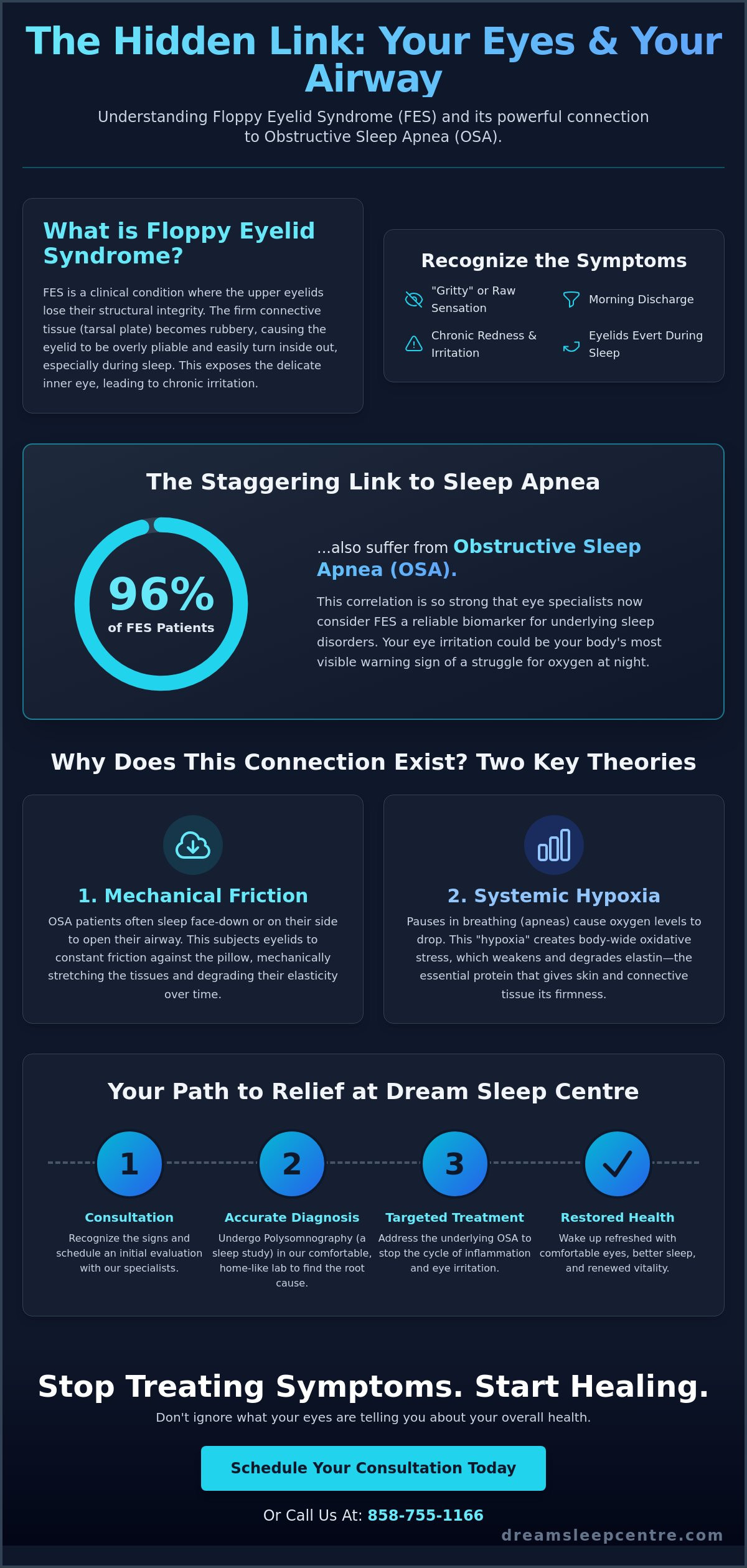
Have you ever woken up with eyes that feel gritty, raw, or unusually red? You might assume it is just San Diego seasonal allergies or a late night, but the culprit could be your eyelids themselves. What is Floppy Eyelid Syndrome (FES)? It is a clinical condition where the upper eyelids lose their structural integrity, becoming overly pliable and prone to turning inside out with the slightest touch. This happens because the tarsal plate, the firm piece of connective tissue that gives your eyelid its shape, develops a rubbery texture. Instead of acting as a protective shield for your cornea, the lid becomes lax and fails to stay closed during the night.
To better understand how this condition affects your ocular health, watch this helpful video:
Many patients come to our office after months of treating what they thought was chronic dry eye or persistent allergies. Because floppy eyelid syndrome presents with symptoms like morning discharge and chronic redness, it is frequently misdiagnosed. If standard eye drops haven’t provided relief after 30 days of consistent use, the underlying issue is likely mechanical rather than environmental. When the lid everts during sleep, the delicate inner lining of the eye dries out and becomes inflamed, leading to significant morning irritation.
Recognizing the Signs of Eyelid Laxity
You may notice your eyelids flipping over easily when you rub them or even while you sleep. This exposure leads to “papillary conjunctivitis,” a bumpy inflammation on the underside of the lid that constantly scratches the eye surface. If you sleep primarily on one side, you will likely find that the eye on that side is significantly more irritated. This asymmetry is a classic clinical marker our team looks for during an initial evaluation.
Why Elastin Matters for Your Eyes
Elastin is the essential protein that allows your skin and connective tissues to snap back into place and maintain firmness. Mechanical friction during sleep degrades these fibers over time. This breakdown is often linked to systemic health issues and increased body weight, which can put extra pressure on facial tissues during rest. If your eyelids have lost their firm “snap,” it is often a sign that your body’s restorative processes are being compromised by a deeper issue.
Don’t ignore what your eyes are telling you about your overall health. Call the Dream Sleep Centre at 858-755-1166 today to schedule your consultation and take the first step toward more restful, healthy nights.
The Critical Link Between FES and Obstructive Sleep Apnea
Clinical research highlights a staggering connection between your eye health and your breathing patterns. Studies indicate that up to 90% of patients diagnosed with floppy eyelid syndrome also suffer from underlying obstructive sleep apnea (OSA). This correlation is so strong that eye specialists now view FES as a reliable biomarker for sleep disorders. If your eyelids have lost their natural elasticity, your body might be signaling a deeper struggle for oxygen during the night.
Two primary theories explain this physiological relationship. The mechanical theory suggests that OSA patients, who often sleep face-down or on one side to keep their airways open, subject their eyelids to constant friction against the pillow. This repetitive stretching compromises the tarsal plate over time. The systemic theory focuses on hypoxia. When you stop breathing, your oxygen levels drop, causing oxidative stress that degrades the elastin in your eyelid tissue. This dual assault makes treating the root cause essential for your long-term comfort and ocular health.
How Sleep Apnea Impacts Ocular Health
Every time you experience a pause in breathing, it triggers a cascade of inflammation throughout your body. This systemic stress doesn’t just affect your heart; it weakens the delicate structures around your eyes. Clinical data shows that patients with a higher BMI or a neck circumference greater than 17 inches are at a significantly increased risk for both OSA and severe FES. Do you find yourself waking up with irritated, red eyes alongside chronic snoring or daytime exhaustion? These symptoms often travel together, indicating that your vitality is being drained by poor sleep quality.
Why an Eye Doctor Might Refer You to Dream Sleep Centre
Ophthalmologists in San Diego often work closely with our office because they recognize that eye drops alone won’t fix a breathing obstruction. Addressing the respiratory root cause often halts the progression of eyelid damage and prevents future complications. When you visit us, we prioritize a multidisciplinary approach to restore your rest. For many, the Diagnostic Next Steps: Polysomnography will confirm the severity of the apnea and provide a roadmap for treatment.
We believe in empowering you with information so you feel confident in Choosing the Right Sleep Apnea Clinic in San Diego. If you’re ready to wake up feeling refreshed and protect your vision, reach out to our office to discuss how we can help. Call Dream Sleep Centre today at 858-755-1166 to schedule your consultation and take the first step toward restorative rest.
Managing Floppy Eyelid Syndrome in San Diego’s Climate
San Diego’s coastal beauty comes with unique environmental challenges for your ocular health. When the Santa Ana winds blow through neighborhoods like Hillcrest or North Park, humidity levels often plummet below 10 percent. This arid environment rapidly evaporates the tear film. It’s particularly damaging if you suffer from floppy eyelid syndrome, as the lack of moisture leaves your eyes vulnerable to significant friction. For an authoritative overview of Floppy Eyelid Syndrome, medical literature confirms that the condition’s primary risk is the mechanical irritation of the eye during sleep, which is only worsened by our local dry spells.
Local Environmental Factors and Your Eyes
Our office recommends maintaining indoor humidity between 30 and 50 percent to protect your delicate ocular surfaces. Use a cool-mist humidifier in your bedroom, especially during the dry autumn months when offshore winds are most active. You should also be mindful of Southern California allergens like sagebrush or ragweed. These irritants cause many patients to rub their eyes frequently. This habit further stretches the tarsal plate and worsens the laxity associated with floppy eyelid syndrome. Identifying these triggers is a vital step in your journey toward comfort.
Non-Surgical Protective Measures
Immediate relief often starts with simple behavioral changes. If you’re a side-sleeper, you likely experience more irritation on the side you favor. Try to sleep on your back or use specialized pillows that prevent your face from pressing into the mattress. Our team suggests these protective steps:
- Apply lubricating ointments before bed to create a lasting moisture barrier.
- Wear nighttime moisture goggles or eye shields to prevent the lids from flipping open against your pillow.
- Prioritize weight management; studies show a 10 percent reduction in body weight can significantly improve both FES and obstructive sleep apnea symptoms.
You might feel tempted to seek surgical tightening of the eyelids as a quick fix. However, surgery is rarely the most effective first step without a comprehensive sleep study. If the underlying sleep apnea isn’t addressed, the mechanical stress on your eyelids will likely continue. This often leads to a recurrence of symptoms within months. We prioritize finding the root cause to ensure your long-term vitality and restful sleep.
If your eyes are red and irritated every morning, it’s time to look deeper than just eye drops. Reach out to our office to schedule a consultation and discover how a custom oral appliance can restore your rest. Call the Dream Sleep Centre today at 858-755-1166 to begin your journey back to refreshed, quiet mornings.
Diagnostic Next Steps: Polysomnography at Dream Sleep Centre
The first step toward resolving the chronic irritation and laxity associated with floppy eyelid syndrome involves a precise diagnosis of the underlying cause. At Dream Sleep Centre, our sleep labs are designed to feel like a boutique, home-like environment rather than a sterile medical facility. We provide specialized “Dream” suites that prioritize your comfort, ensuring the data we collect reflects a natural night of rest. Identifying obstructive sleep apnea (OSA) is the most vital step for your long-term eyelid health and systemic vitality. Clinical data suggests that up to 90% of patients presenting with these specific eyelid symptoms also suffer from significant sleep-disordered breathing.
What to Expect During Your Sleep Evaluation
Your polysomnography is a painless, non-invasive process. While you rest in one of our San Diego suites, our specialists use advanced sensors to monitor your oxygen saturation levels, heart rate, and specific breathing patterns. This data allows us to see exactly how many times your airway collapses during the night, which is often the catalyst for the ocular changes you are experiencing. We operate multiple San Diego locations to ensure your diagnostic journey is convenient and stress-free. For a deeper look at the process, you can read our guide on Understanding the In-Hospital Sleep Study in San Diego.
Personalized Treatment Beyond the Sleep Study
Once we confirm an OSA diagnosis, we move quickly toward a solution that fits your unique lifestyle. While CPAP is a traditional recommendation, many of our patients find liberation through Oral Appliance Therapy. These custom-fitted devices are quiet, travel-friendly, and highly effective at keeping the airway open without the need for bulky masks or machines. By treating the root cause of your sleep apnea, you provide your body the chance to heal the tissues affected by floppy eyelid syndrome. Restorative sleep is the foundation of both ocular health and your overall sense of well-being.
Reach out to our office today at 858-755-1166 to schedule your consult. Our team is ready to help you reclaim your rest and protect your vision. Don’t let another night of poor sleep impact your health; take the first step toward a more refreshed life now.
Prioritize Your Health and Reclaim Your Vitality
Noticing the signs of floppy eyelid syndrome is a vital opportunity to address your health before sleep deprivation takes a heavier toll. Clinical research highlights that up to 90% of people with this specific eyelid laxity also have obstructive sleep apnea. By connecting these symptoms, you can move beyond temporary eye drops and address the root cause of your fatigue and physical discomfort.
Our office offers a supportive, expert-led environment to help you find answers. Led by Dr. Ramadevi Arani, MD, Dream Sleep Centre provides boutique sleep study settings that prioritize your comfort and peace of mind. We maintain multiple San Diego locations to ensure that professional care is always within reach. You don’t have to navigate these symptoms alone; our team is here to guide you toward a solution that fits your lifestyle and restores your energy.
Take control of your well-being right now. Schedule your San Diego sleep consultation at Dream Sleep Centre today or call our team at 858-755-1166. We look forward to helping you achieve the deep, restorative rest you deserve.
Frequently Asked Questions
Is floppy eyelid syndrome a serious condition?
Floppy eyelid syndrome is a serious clinical indicator of underlying systemic health issues that require your attention. While the eye irritation itself is uncomfortable, research published in the Journal of Clinical Sleep Medicine indicates that up to 90 percent of patients with these symptoms also suffer from obstructive sleep apnea. Ignoring these signs can lead to chronic corneal damage or permanent vision loss. It’s vital to address the root cause to protect your long-term health and vitality.
Can floppy eyelid syndrome go away on its own?
This condition rarely resolves without professional intervention because it’s tied to the degradation of elastin in your eyelid tissues. Without treating the mechanical friction or the underlying sleep disorder, symptoms like redness and discharge often persist for years. Our office focuses on holistic recovery by addressing the nightly oxygen deprivation that contributes to tissue breakdown. Reaching out for a professional consultation is the first step toward finding lasting relief and restorative rest.
How do I know if my loose eyelids are caused by sleep apnea?
You can identify a link if your eyelid laxity is paired with symptoms like loud snoring, waking up gasping, or persistent daytime exhaustion. A 2017 clinical study found that 1 in 3 patients with floppy eyelid syndrome also reported these classic sleep apnea markers. If your eyelids easily flip over or feel rubbery during the night, it’s a strong signal that your body is struggling for air. Call 858-755-1166 to schedule a screening today.
What kind of doctor should I see for floppy eyelid syndrome in San Diego?
You should consult both an ophthalmologist for immediate eye care and a sleep medicine expert to address the systemic cause. At Dream Sleep Centre in San Diego, we specialize in identifying the connection between your physical symptoms and your sleep quality. Our team provides oral appliance therapy as a comfortable, travel-friendly alternative to CPAP machines. We work with local specialists to ensure your care is comprehensive and helps you regain your daily energy.
Will a sleep study help fix my red, irritated eyes?
A sleep study is the essential diagnostic bridge that allows us to treat the source of your eye irritation. Once we confirm a diagnosis through an overnight study, we can implement treatments that stabilize your breathing and reduce nighttime tossing. This prevents the mechanical trauma to your eyes that occurs during restless sleep. Many of our patients notice their eyes feel more refreshed and less gritty within 14 days of starting their personalized therapy plan.
Disclaimer
The information provided by Dream Sleep Centre is for educational and informational purposes only and does not constitute medical advice, diagnosis, or treatment. Always seek the advice of your physician or other qualified health provider with any questions you may have regarding a medical condition or sleep disorder. Never disregard professional medical advice or delay in seeking it because of something you have read on this website. Reliance on any information provided here is solely at your own risk.