
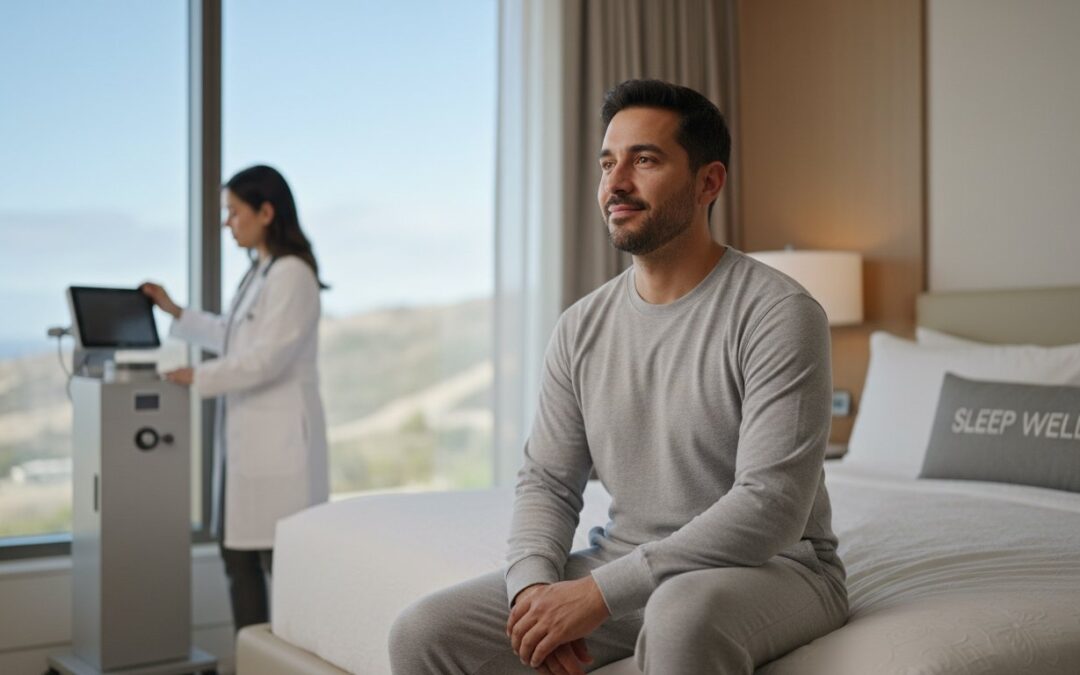
Have you ever found your eyes growing heavy while navigating the 5:00 PM rush on the I-5, even after getting a full eight hours of rest? It’s a frightening sensation when your body demands sleep at the most dangerous moments. You likely agree that there’s a profound difference between being “just tired” and feeling a persistent, heavy fog that compromises your safety. At Dream Sleep Centre, we utilize the multiple sleep latency test to determine if your exhaustion is a clinical signal that requires expert attention. This is vital information, as the National Safety Council reports that drowsy driving contributes to 100,000 crashes every year.
Discover how this specialized diagnostic tool at our San Diego clinic identifies the root cause of your daytime fatigue and paves the way for restorative rest. We promise to provide a clear path toward health within a comfortable, home-like environment designed to put your mind at ease. This guide previews the diagnostic process, our advanced testing technology, and the specific steps our specialists take to restore your vitality. If you’re ready to stop guessing and start healing, reach out to our office at 858-755-1166 to schedule your consultation today.
Key Takeaways
- Learn why the multiple sleep latency test is considered the gold standard for objectively measuring daytime sleepiness and uncovering the root cause of your persistent fatigue.
- Discover what to expect during your day at our San Diego sleep lab, including our structured nap schedule and the non-invasive technology used to monitor your brain’s path to rest.
- Prepare for a successful study by following our essential checklist, which covers the importance of a two-week sleep diary and how to manage caffeine intake before your visit.
- Understand how our physician-led team at Dream Sleep Centre interprets your data to differentiate between conditions like narcolepsy and idiopathic hypersomnia.
- Take the first step toward restorative rest and reclaim your vitality by contacting our office at 858-755-1166 to schedule your professional consultation today.
What is a Multiple Sleep Latency Test (MSLT) and Why Do San Diego Patients Need It?
Do you find yourself struggling to stay alert during a mid-afternoon meeting in Sorrento Valley or while studying at UC San Diego? If persistent fatigue clouds your day, our office uses the Multiple Sleep Latency Test to find concrete answers. This diagnostic tool is the “gold standard” for measuring objective daytime sleepiness and is essential for diagnosing narcolepsy. While an overnight polysomnography (PSG) monitors your sleep quality through the night, the multiple sleep latency test evaluates your “sleep latency,” or how many minutes it takes you to reach the first stage of sleep in a quiet environment.
Our specialists typically conduct this study through a series of 5 scheduled nap opportunities spaced 2 hours apart. We perform it the morning after your PSG to confirm that your daytime fatigue isn’t just a side effect of one restless night. For the 1 in 2,000 people living with narcolepsy, this data is life-changing. It transforms a vague sense of exhaustion into a clinical diagnosis that we can treat with precision.
Common Symptoms That Lead to an MSLT Referral
We often recommend this study when San Diego patients report symptoms that interfere with their daily productivity or safety. These include:
- Excessive Daytime Sleepiness (EDS) that makes you feel drowsy despite getting a full 8 hours of sleep.
- Cataplexy, which involves a sudden, temporary loss of muscle control often sparked by laughter or surprise.
- Sleep paralysis or vivid, dream-like hallucinations that occur right as you’re falling asleep or waking up.
MSLT vs. MWT: Understanding the Difference
It’s helpful to distinguish the MSLT from the Maintenance of Wakefulness Test (MWT). While the MSLT measures how quickly you fall asleep, the MWT assesses your ability to remain awake in a quiet room. Our office may prioritize the MWT if your career involves high-stakes safety, such as commercial transit or maritime work in the San Diego Bay. Identifying the root cause of your exhaustion is the first step toward a more refreshed, vibrant life. Call Dream Sleep Centre at 858-755-1166 today to book your consultation and start your journey toward restorative rest.
The MSLT Procedure: What to Expect During Your Day at Our San Diego Sleep Lab
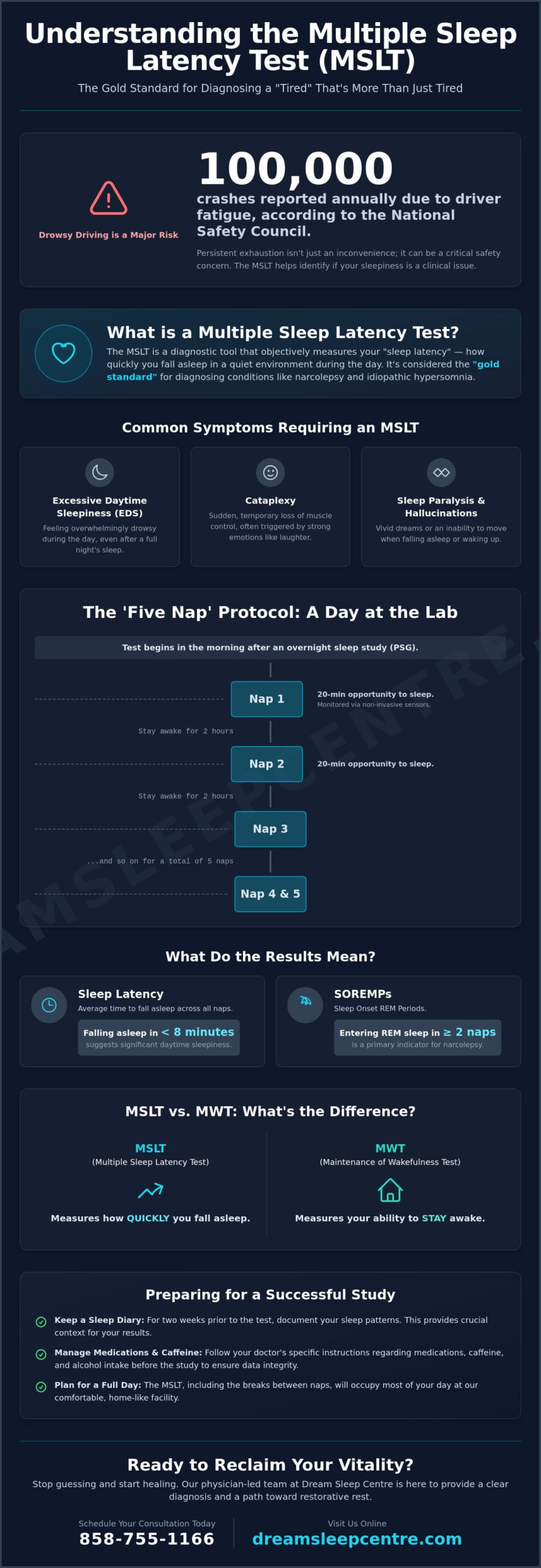
Your day at Dream Sleep Centre begins shortly after your overnight sleep study concludes. The multiple sleep latency test is the gold standard for measuring how quickly you fall asleep in a quiet environment during the day. Our specialized technicians will guide you through a structured schedule consisting of five 20-minute nap opportunities, each spaced exactly two hours apart. We use non-invasive sensors placed on your scalp and face to monitor brain waves and eye movements. This data allows us to identify exactly when sleep begins and whether you enter REM stages.
The ‘Five Nap’ Protocol Explained
During each trial, you’ll have 20 minutes to transition into sleep. If you don’t fall asleep within that window, the trial ends and you’ll wait for the next session. We specifically look for Sleep Onset REM Periods (SOREMPs). Reaching REM sleep in two or more of these naps is a primary indicator used in narcolepsy diagnostics in San Diego. For more detailed patient information on the MSLT, the American Academy of Sleep Medicine provides comprehensive guidelines on what these results mean for your health.
- Immediate Sleep: Falling asleep in less than eight minutes across all naps suggests significant daytime sleepiness.
- REM Entry: Entering REM sleep quickly during daytime naps is an atypical physiological response that helps us differentiate between various sleep disorders.
- Technician Guidance: Our staff remains in constant communication, ensuring you stay awake between trials to maintain the integrity of the data.
Comfort and Amenities at Dream Sleep Centre
We’ve designed our San Diego and Hillcrest locations to feel like a boutique retreat rather than a clinical facility. Each private room features high-quality bedding and a calm atmosphere to minimize any jitters often felt in hospital settings. Between naps, you can relax in our comfortable lounge areas or use our guest Wi-Fi. Our goal is to ensure you feel refreshed and supported throughout the day. If you’re struggling with persistent exhaustion, it’s time to find answers. Reach out to our office at 858-755-1166 to discuss your symptoms. You can also schedule a consultation at our San Diego facility to begin your journey toward restorative rest.
Preparing for Your MSLT: A Checklist for a Successful Study in Southern California
Preparing for your visit requires careful planning to ensure we capture the most accurate data about your sleep health. You’ll need to keep a detailed sleep diary for exactly 14 days before your appointment. This log helps our team confirm that your daytime sleepiness isn’t simply the result of a varying schedule or chronic sleep deprivation. We look for a consistent sleep-wake pattern to validate the results of your multiple sleep latency test.
While San Diego is home to over 100 independent coffee roasters, you’ll need to abstain from all caffeine for at least 24 hours before the study. Stimulants can artificially mask your sleepiness, while certain antidepressants can suppress REM sleep. For a deeper look at the clinical procedure, you can read What is a Multiple Sleep Latency Test (MSLT) from the American Academy of Sleep Medicine. If you take regular medications, please discuss a tapering schedule with your physician at least 15 days in advance.
The Night Before: Why the PSG Matters
Every multiple sleep latency test starts with an overnight in hospital sleep study. This prerequisite is vital. We must confirm you received at least 360 minutes of restorative sleep before the daytime trials begin. This overnight session allows us to rule out obstructive sleep apnea or restless leg syndrome, ensuring your daytime fatigue isn’t caused by these common breathing or movement interruptions.
Navigating Your Appointment Day
Your day at our San Diego lab lasts about 9 hours. Pack a bag with comfortable, loose-fitting clothes and light, protein-rich snacks. Avoid heavy meals between the five scheduled nap opportunities, as a heavy lunch can cause postprandial somnolence that skews your data. You’ll have about 2 hours between each nap trial. Bring a book or a tablet to stay occupied, but avoid high-stress work or overstimulating activities that might prevent you from relaxing when the next trial begins.
If you’re ready to reclaim your vitality and find answers to your exhaustion, reach out to our office at 858-755-1166 to schedule your consultation today.
Understanding Your MSLT Results and Finding Relief at Dream Sleep Centre
After completing the multiple sleep latency test, our physician-led team carefully analyzes the time it took for you to fall asleep during each scheduled nap. A mean sleep latency of less than 8 minutes serves as a primary clinical indicator of a sleep disorder. However, the raw numbers only tell part of the story. We look closely at the presence of Sleep Onset REM Periods (SOREMPs) to differentiate between specific conditions. If you entered REM sleep during two or more naps, it often points toward Narcolepsy. When REM episodes are absent but the sleep latency remains under 8 minutes, the data may suggest Idiopathic Hypersomnia.
Our specialists use these results to distinguish between Narcolepsy Type 1, which involves cataplexy, and Type 2. The “Dream” approach transitions you quickly from diagnosis to a personalized, non-surgical treatment plan. We believe a clear diagnosis is the first step toward reclaiming your vitality and ensuring your safety during daily activities. You deserve a life defined by alertness and clarity rather than a constant struggle against fatigue.
Next Steps After Your Diagnosis
Managing excessive daytime sleepiness involves a combination of medical consultations and strategic behavioral adjustments. We may recommend scheduled power naps or specific lifestyle changes to help regulate your internal clock. Our team also coordinates care for overlapping conditions. If your daytime fog is exacerbated by difficulty falling asleep at night, we provide the insomnia treatment del mar patients rely on for restorative rest. Every plan is tailored to your unique physiological needs and professional demands.
Schedule Your Consultation Today
Don’t let another day pass in a state of exhaustion. As a leading sleep apnea clinic and comprehensive sleep center, we provide the clinical expertise necessary to solve complex sleep issues. Reach out to our office to schedule your professional evaluation and begin your journey toward a refreshed life. Call us at 858-755-1166 today to book your appointment. Your path to better health starts with a single conversation.
Take the First Step Toward Restorative Rest
Living with persistent exhaustion isn’t just frustrating; it’s a significant barrier to the vibrant life you deserve. By completing a multiple sleep latency test, you’re taking a vital step toward uncovering the physiological reasons why your body refuses to feel rested. Our boutique sleep lab in San Diego provides a calm, comfortable environment designed to reduce the anxiety often associated with diagnostic studies. Under the leadership of Dr. Ramadevi Arani, MD, our team specializes in identifying conditions such as narcolepsy and creating comprehensive, non-surgical treatment plans tailored to your specific needs. We understand the heavy toll that daytime sleepiness takes on your productivity and emotional well-being. Don’t let another day pass in a fog of fatigue when professional answers are within reach. You deserve to wake up feeling refreshed and ready to engage with the world again. Our office is here to provide the clinical expertise and compassionate care necessary to restore your vitality.
Ready to find the cause of your daytime sleepiness? Call Dream Sleep Centre at 858-755-1166 to schedule your San Diego sleep consultation today.
We look forward to helping you achieve the deep, healing sleep you’ve been missing.
Frequently Asked Questions
Is the Multiple Sleep Latency Test covered by insurance in California?
Most major insurance providers in California, including Medicare and private carriers, cover the multiple sleep latency test when it’s medically necessary to diagnose narcolepsy. About 85 percent of patients find that their diagnostic testing is a covered benefit under their current health plan. Please reach out to our office at 858-755-1166, and we’ll help you navigate your specific coverage details to ensure a smooth path to treatment.
Can I take my regular medications before an MSLT?
You’ll likely need to stop taking specific medications, such as stimulants or REM-suppressing drugs, at least 14 days before your appointment. These substances can significantly alter your sleep architecture and impact the accuracy of your multiple sleep latency test results. Our team provides a personalized list of instructions during your consultation to ensure you’re prepared for a successful, quiet day of testing.
What happens if I can’t fall asleep during one of the naps?
Don’t worry if you can’t fall asleep during every session, as the test is designed to measure your average sleepiness across five distinct nap opportunities. Each window lasts about 20 minutes, and even sessions where you stay awake provide our clinicians with essential data about your level of alertness. We focus on the collective results of all trials to create a restorative care plan that returns vitality to your daily life.
How long does it take to get MSLT results back?
You’ll generally receive your finalized results within 7 to 14 days after your visit to the Dream Sleep Centre. A board-certified sleep specialist must carefully interpret the data from your nap trials to ensure your diagnosis is precise and professional. Once the report is ready, we’ll call you to discuss how professional care can help you achieve the refreshed, restful state you deserve.
Is an MSLT necessary if I already had an overnight sleep study?
An MSLT is often necessary because it evaluates daytime sleepiness, whereas an overnight study focuses on breathing issues like obstructive sleep apnea. For a valid result, you must complete an overnight study with at least 360 minutes of sleep immediately before the daytime portion begins. This structured approach helps us rule out other causes for your fatigue and guides you toward the most effective therapy. Call our office today at 858-755-1166 to schedule your consultation.
Disclaimer
The information provided by Dream Sleep Centre is for educational and informational purposes only and does not constitute medical advice, diagnosis, or treatment. Always seek the advice of your physician or other qualified health provider with any questions you may have regarding a medical condition or sleep disorder. Never disregard professional medical advice or delay in seeking it because of something you have read on this website. Reliance on any information provided here is solely at your own risk.